

Making Med School Possible
Some walls keep people out, but the one outside Professor Robin Maxwell’s office is a portal leading students like biology major Daniel Araya ’24 to their dream destination.
“It’s packed with invaluable resources, including year-to-year course advising, summer internship opportunities, and extensive information on what medical schools seek in prospective students,” Araya said just before graduation, gesturing to the wall. “This was my transformative place on campus.”
Maxwell uses this space, and the advising that happens in her office, to improve access to medical schools. She believes that UNCG’s student body and its longstanding commitment to health care makes it the perfect launchpad for future doctors that med schools and hospital systems are looking for.


UNCG’s health-related Pre-Professional Advising program, led by Maxwell, is often called the “pre-med program,” but it also covers veterinary, dental, occupational and physical therapy, and pharmacy. She advises motivated undergraduates and “post-baccs,” who take extra classes after obtaining their undergraduate degrees to prepare for med school.
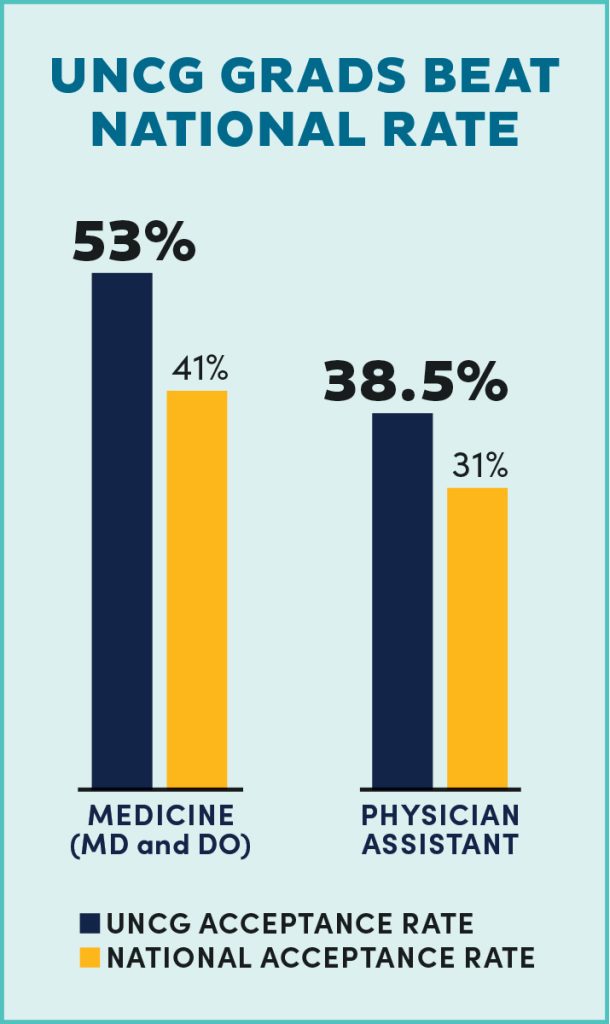
Her enthusiasm for connecting students with the right medical schools is infectious, and it works. In 2024, UNCG undergraduates’ acceptance rates were higher than the national average for med school, physician assistant school, and physical therapy school.
Since UNCG doesn’t restrict access to pre-professional programs with prerequisites or a minimum GPA, any student – or even alumnus – is welcome to participate. Further, the University’s “Goldilocks” size (not too large, not too small) gives students optimal research opportunities and meaningful mentorship with faculty, both great assets for med school applications.
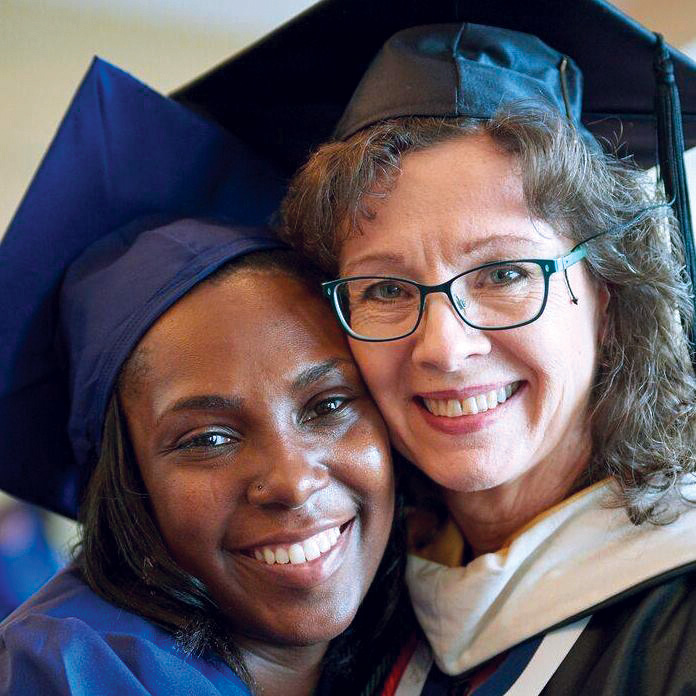
We’re in the trenches with them. That one-on-one relationship is so important if no one in your family has been to college, much less medical school.
— Robin Maxwell, Biology Lecturer, Chair of Health Careers Advisory Committee
“We have the most flexible and efficient post-baccalaureate program in not only the state, but the nation,” Maxwell says. “We first sit down and talk about your commitment to this career path and what you need to reach your goals. High grades and appropriate courses are a key part of the discussion, but med schools are looking for much more than a high GPA.”
In 2016, the Association of American Medical Colleges changed their acceptance criteria and adopted 15 core competencies they value in incoming medical students.
“Science skills are just part of them,” Maxwell explains. “Teamwork, communication, ethics, desire for service, cultural competence, critical thinking, reliability, resilience, the ability to improve – these are among skills that med schools are looking for.”
Currently, UNCG has 2,535 students in health-related pre-professional tracks. Many are biology majors, but others major in kinesiology, nutrition, psychology, or recreational therapy. Maxwell advises them to choose a major they can excel in and focus on leadership positions and extracurriculars that showcase their well-rounded experience.
“Our philosophy is everybody has a chance,” she says. “If they make the decision to commit themselves to this goal, we’ll do our best to help them reach it.”
A Legacy of Guidance
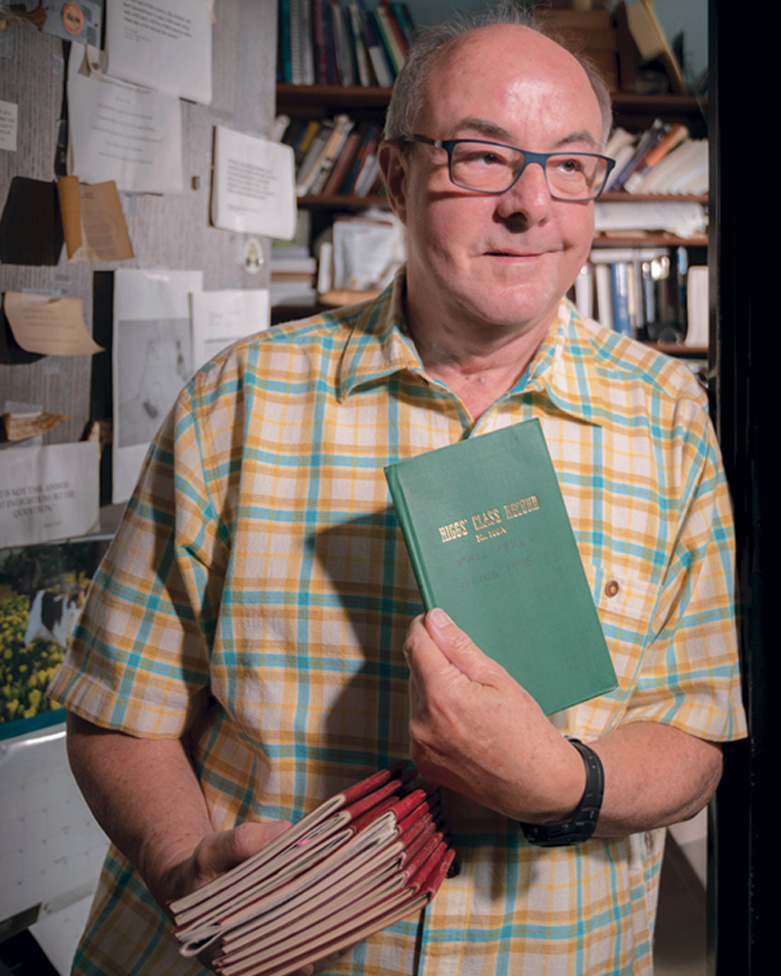
Before Robin Maxwell became chair of the Health Careers Advisory Committee, Dr. Rob Cannon was the advisor to many UNCG students with dreams of becoming a physician.
From 1974 to 2014, he chaired the committee, known as the Premedical Advisory Committee before it was broadened to include more medical careers. Cannon recalls that chemistry professor Dr. John Graves was chair of the committee before him, and he taught Maxwell as an undergraduate and graduate student before she became his colleague.
Even after entering phased retirement, Cannon continued to advise UNCG students and serve on the National Association of Advisors for the Health Professions. “If you count all this, I have been a premed/health professions advisor for 52 years and counting,” he says.
He remembers building relationships with students over many years and striving to keep resources and advice current. This was especially important when the Medical College Admission Test (MCAT) was revised in 2016.
“I visited all the relevant department heads to discuss the new content in the revised MCAT,” he explains. “This included not only the science department heads, but also psychology and sociology departments.”
This commitment and his open-door policy for advisees made a difference that students and alumni still reflect on.
Support & Representation
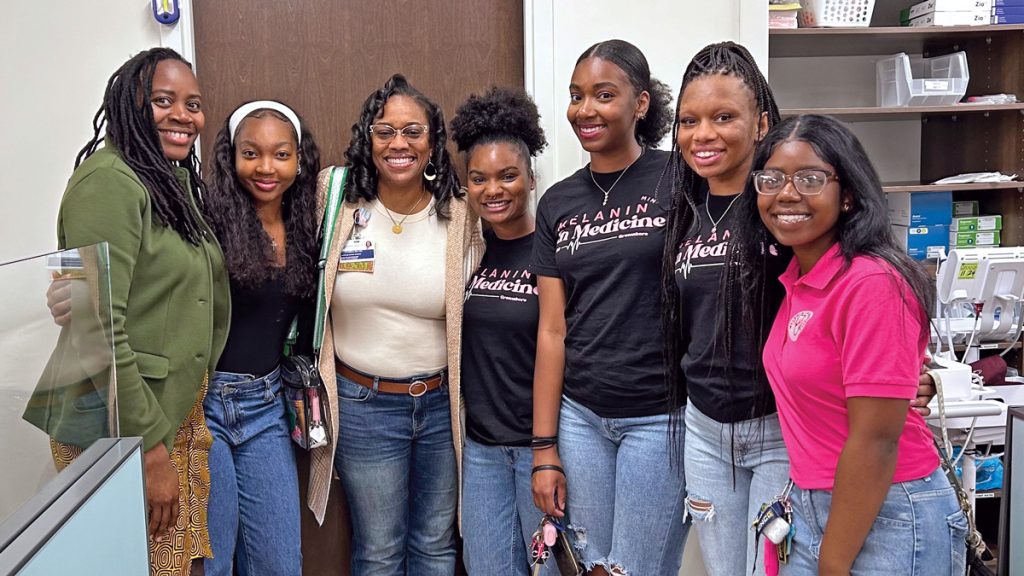
The student club Melanin in Medicine creates a supportive space for underrepresented students pursuing medicine and health care fields. Zariah Johnson, its founder and president, says it has helped her grow as a leader and mentor. “It’s taught me the importance of advocacy and representation in medicine,” she says.
Med School Application Prep
A transcript with a high GPA is only a piece of today’s medical school applications. What else are med schools looking for?
- Extracurriculars showing leadership roles and a commitment to service
- Clinical experience shadowing professionals and practicing patient care
- Undergraduate research
- Strong letters of recommendation from faculty members
- A unique personal statement that illustrates a candidate’s commitment to the challenging medical training ahead
Pre-Med Alumni Profiles
These four alumni leveraged their UNCG pre-med experience into fulfilling medical careers. Explore all four below:
Emergency Medical Care
Mia McDonald ’15

Late at night while most of Raleigh sleeps, the Raymond L. Champ Center for Emergency Medicine at WakeMed Hospital bustles with activity. The exam rooms are full of patients who are sick, weak, and in pain. Their families crowd into the waiting area hoping for good news. Staff move from room to room – observing, listening, running tests, and reassuring worries.
“You never know what’s going to roll in the door or how the night is going to go,” says Physician Assistant Mia McDonald ‘15. “I treat patients from all walks of life and it’s often the worst day of their lives. I’m here to guide my patients through that experience and hopefully make it easier.”
Prosthetic Solutions
Jason Baity ’15
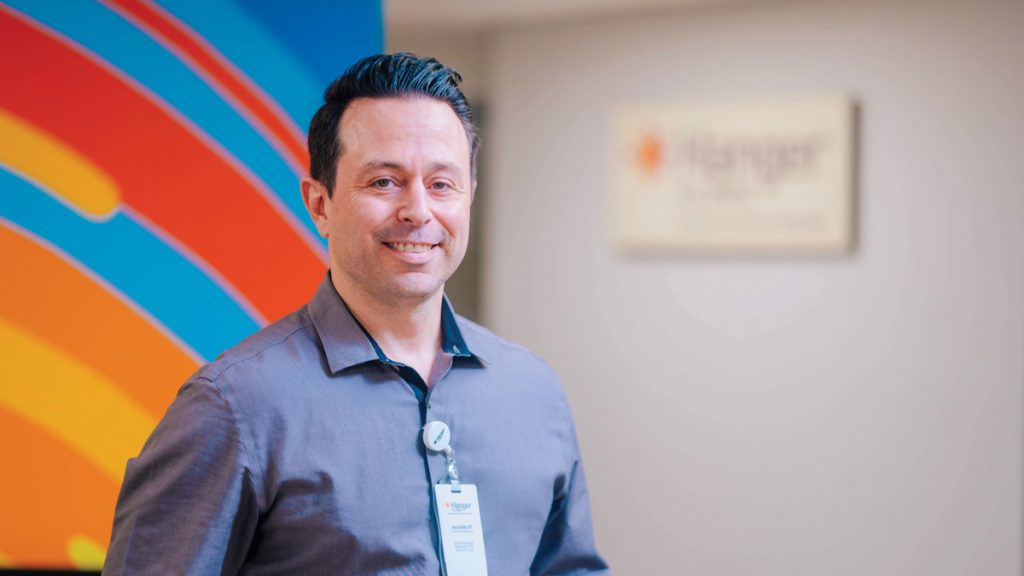
Jason Baity ’15 helps amputees live their lives without limits.
A prosthetic clinician at Hanger Clinic in Durham, Baity develops care plans for patients missing lower or upper extremities. He begins by determining the functions they hope to regain with a prosthesis, fitting patients with a customized limb replacement, and then training them to use the prosthesis for optimal function.
It’s a noble, yet unexpected, profession that came to pass after a few career detours.
Cardiology Deployments
Nodia Robinson ’17

Ten years ago, Nodia Robinson was deployed to Afghanistan. A convoy commander and transportation officer, she managed gun trucks and ran rotary and fixed wing fuel and water supplies. The captain, linked to U.S. Special Forces, never lost sight of her plan: becoming a cardiologist.
A native of Charleston, S.C., Robinson was motivated to make a difference by her grandmother who had poor health access and health literacy even though great hospitals were nearby. “Affording insulin, accurately measuring it in vials, improving her diet, and getting to and paying for medical appointments were major hurdles before she died at age 83,” she says. “Those final years were so hard, but her heart disease led me to my focus.”
Neurological Advancements
Trey Bateman ’08

When Trey Bateman ’08 arrived at UNCG, he had more on his mind than the typical college student. He believed excelling academically would provide an answer to his family’s financial problems, but a medical career in behavioral neurology was far from his radar.
Bateman’s mother had just lost her job at Pillowtex, a casualty of North Carolina’s textile industry decline, so she decided to enroll in the local community college to improve her job skills just as Bateman was heading to UNCG. To keep costs down, he commuted from their home in Eden, parking near the First Horizon Coliseum and taking the bus to class every day.
A History of Science Access
“It’s what this campus has done from the start,” says Dr. Alice Haddy, professor of chemistry. “We create opportunities for those who might otherwise not be allowed to reach their dream and to make their mark.”
In UNCG’s earliest days, those opportunities were created for women at North Carolina State Normal and Industrial School and later at The Woman’s College of the University of North Carolina, and for many it was an opportunity for science education.
Dixie Lee Bryant led the science department for the first students to attend “State Normal” in 1892. She set up the first science labs and became the first professor on campus – male or female – with an earned PhD. She taught geography, botany, chemistry, physics, zoology, and geology to female students, who in some cases had never studied science before.
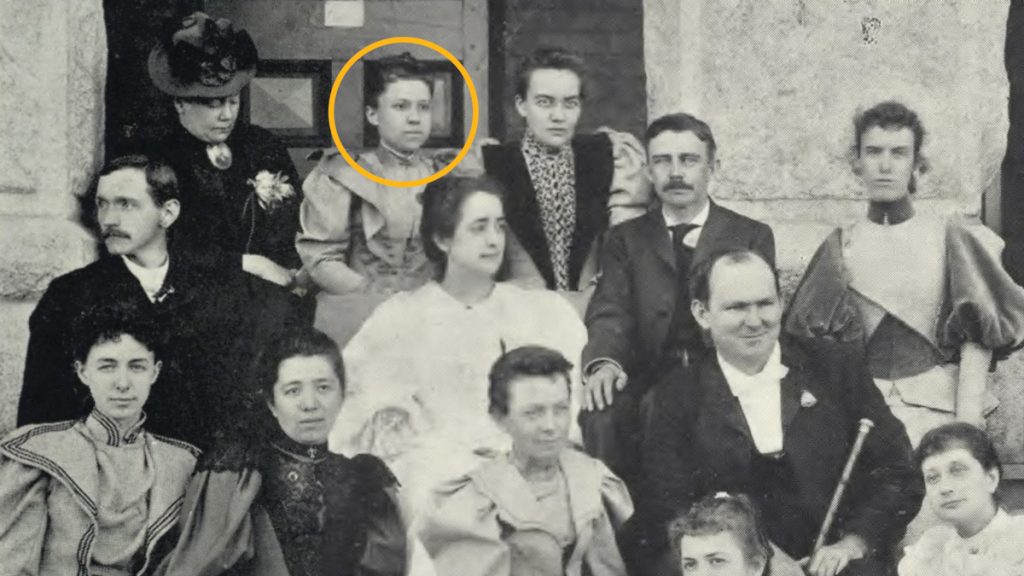

Mary Macy Petty joined Bryant in teaching science in 1893. She was responsible for chemistry and physics classes and became head of chemistry until 1934 when she retired. In 1960, the science building was renamed in her honor and continues to be known as the Petty Building.
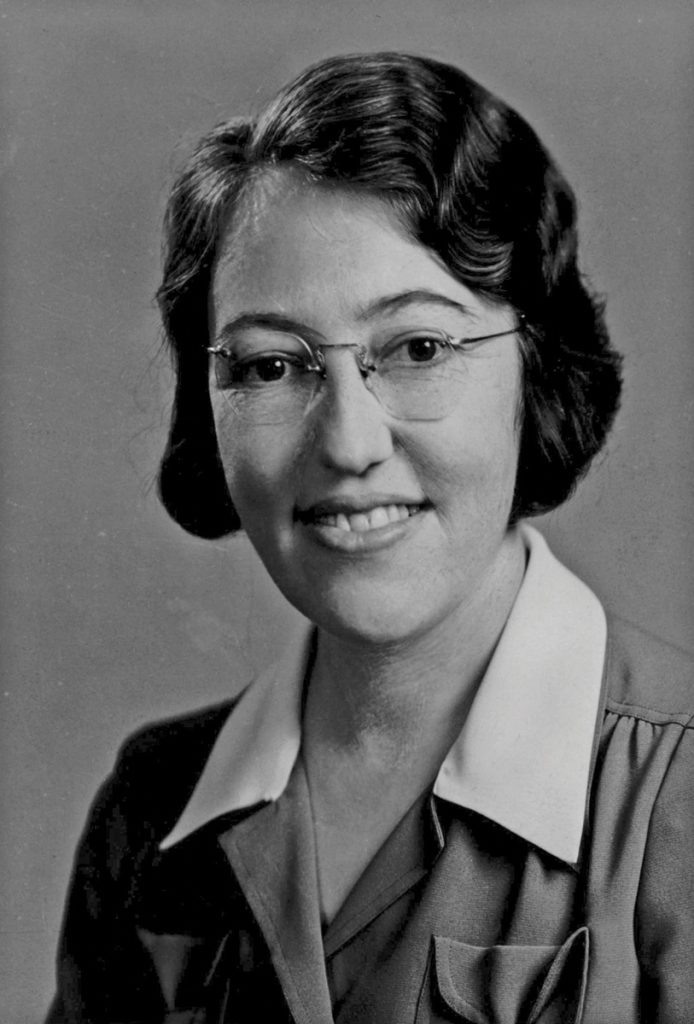
In recent years, Florence Schaeffer has been lauded as the most impactful science professor and mentor in campus history. She joined the chemistry department in 1922, succeeded Petty as head of chemistry at Woman’s College, and served the University until 1972.
“Florence Schaeffer was incredibly impactful for this campus and its science students,” says Dr. Alice Haddy. Haddy has heard praise from faculty members – and alumni – about Schaeffer since she joined the chemistry department in 1994, which led her to begin researching Schaeffer’s career. Last fall she delivered a talk on her findings at the UNCG Archives’ Hodges Reading Room.
According to Haddy, Schaeffer’s long tenure at the University expanded her impact: “The campus has been blessed with outstanding mentors in the health and science realm – Mary Petty, Eloise Lewis, Anna Gove, Anna Joyce Reardon, and Mary Channing Coleman come to mind. But a five-decade career in bringing science to mostly female students is what sets Schaeffer apart.”
After having received a master’s from Mount Holyoke, Schaeffer came to Woman’s College wanting to emulate Mount Holyoke’s commitment to educating female scientists and encouraging them to conduct research, leading to publication. She guided many students on their path to advanced degrees and establishing careers in science, teaching, and medicine.
“Schaeffer had high standards,” Haddy says. “And under her leadership, the department did too. She provided opportunities for and was supportive of women faculty, many with advanced degrees.”
Schaeffer’s leadership took advantage of a critical shift in women’s interest in science. Data shows the number of majors in chemistry spiked in the 1940s, despite a relatively steady overall school enrollment. Haddy speculates this was partly due to perceived demand in the field during wartime, and partly because women developed a different attitude toward the necessity of their careers.
Mary Katsikas ’62, who worked at Vick’s Chemical before returning to campus as a lab manager, remembers chemistry graduates being in high demand from top companies in the 60s: “We had people from pharmaceutical companies like Smith, Kline, and French and chemical corporations like Monsanto and Union Carbide who wanted to hire people from the department because of our training. We really were trained strictly.”
Schaeffer set that bar and brought opportunities and science careers to women who might not have discovered them otherwise, Haddy says. “She helped position this University for growth in the sciences for the years to come, as we became UNCG, became coed, and developed a greater emphasis on research in all of the science departments.”
Without Schaeffer, and Bryant and Petty before her, UNCG wouldn’t have the history of access, excellence in science education, and tradition of preparing students for evolving workplace demands. It’s a history that continues today as UNCG matches students with medical, physician assistant, and physical therapy programs. It’s a prescription to serve, rooted in science, and for the benefit of communities in North Carolina and beyond.
‘Thank you, Miss Schaeffer’

It’s not uncommon, upon retirement, for former students to reach out with congratulations, but the outpouring at Schaeffer’s retirement was voluminous. Students sent messages of gratitude. A scrapbook album preserved in UNCG Archives tells the tale.
In page after page of cursive notes and snapshots, students
from the 1920s and five decades afterward describe their careers and the impact Schaeffer had on their lives and
their families.
“Miss Schaeffer helped Woman’s College develop the sciences, while trying to offer more opportunities for women in general.” — Dr. Alice Haddy, UNCG Professor of Chemistry
“The learning process was an exciting, thrilling, and entertaining experience, because you, Miss Schaeffer, have the gift of inspiring and awakening a student’s ability to learn.” — Ethel Sledge Barker ’31
“A friend told me ‘she’s hard but she’s good’ – and she was right. Thank you for being the best ‘teaching’ teacher I ever had.” — Julia Hill Gunn ’45
“I was one of your first students. Since my husband’s death, I have had a job as instructor, teaching chemistry lab at NC State University. I’m not the teacher you are. I’m still trying, though!” — Elizabeth Hines Manning ’29