

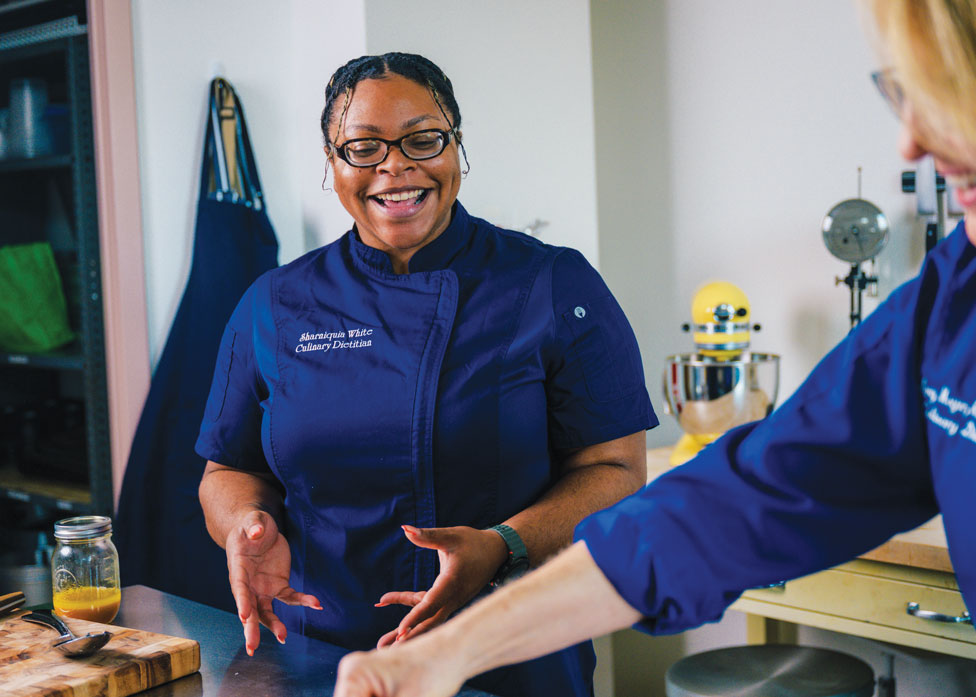
The morning sun shone into the UNCG teaching kitchen in Stone Building. Amy Moyer ’85, ’86 MEd and Sharniquia White ’21, ’23 MS were there to show UNCG Magazine a delicious – and healthy! – fall recipe. Moyer leads the culinary medicine program at UNCG. White, an alumna of the program, is now the resident campus dietitian for Spartan Dining, which includes Fountain View Dining Hall, EUC Food Court, and other eateries on campus.
Moyer says, “A teaching kitchen is a great way to get students, patients, or clients comfortable in the kitchen. They can learn the confidence and self-efficacy of preparing food.”
And, because cooking is often about more than just food, the teaching kitchen also feels inviting. “During classes or workshops, the kitchen can become a conversation hub,” says White.
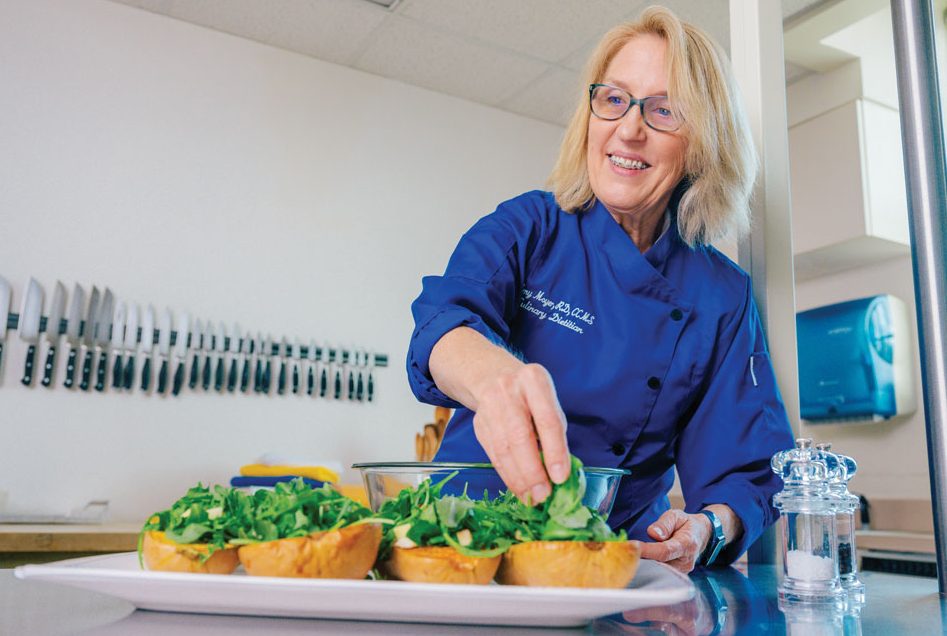
They’re sharing their butternut harvest salad. On one counter, the mise en place is waiting.
Sunlit cookbooks line the windowsills, and an array of stocked workstations stand at the ready. Two dozen knives – from the big “chef’s knife” to the smallest paring knife – line one wall. A row of KitchenAid mixers lines another.
Now, Moyer shakes up ingredients for the vinaigrette. A scored butternut squash roasts in the oven.
Research leads us to the conclusion that the more you cook at home, the healthier you tend to eat.
—Amy Moyer ’85, ’86 MED, Director of Culinary Medicine
Nutrition + Culinary Medicine
Who do you ask for advice about nutrition? Credible recommendations can change based on science, research, and data. That’s why Moyer says the best source of information is a registered dietitian.
She should know.
For Moyer, cooking came early in life. “We raised all of our own vegetables, and my mom liked to work outside better than I did,” she says. “So, I was given the task of cooking lunch every day, which was the big meal. While she was out working in the garden, I had to start learning how to cook. And that’s where it started.”
Now she has more than three decades of experience as a dietitian working in settings from public hospitals to private continuing-care retirement communities. Since 2019, she has headed the culinary medicine program in UNCG’s Department of Nutrition.
It’s one specialty in a program that combines a Master of Science in Nutrition with the clinical practicum required for eligibility to sit for the credentialing exam to become a registered Dietitian nutritionist (RDN).
RDNs work in many arenas: sports nutrition, hospitals, hotels, schools, or corporations. That means RDNs may deal with clients, students, or patients, depending on their career path.
Moyer’s area of expertise is culinary medicine, which focuses on how food mitigates chronic health conditions. “Culinary medicine teaches students to bridge the gap between nutrition science and practical application. They learn how to translate the science into tasty meals that are feasible to prepare and build skills to effectively treat patients. It creates opportunities for dietitians to work hand in hand with physicians in treating chronic disease,” she explains.
The department’s dietetic interns – future RDNs – complete baseline training in culinary medicine and sports nutrition as a portion of a 10-week campus-based supervised preparation. Afterward, they may pursue in-depth studies in one or both fields. They also gain 1,000 hours of hands-on experience in three different internship rotations: a community rotation, a food service rotation, and a clinical rotation.
The interns have more choice at UNCG than at similar programs, Moyer says. “Interns pull together a packet of information and send it to the sites they want to work with. So, it’s a true match process. That’s very unique because a lot of programs don’t offer that autonomy for students.”
The culinary medicine curriculum, Health meets Food, is licensed from the American College of Culinary Medicine. It is rigorous, peer-reviewed, and targeted to specific needs that clients or patients may have: celiac disease, food allergies, or nutrition during pregnancy. “If we have a cardiovascular patient,” says Moyer, “our recipes are going to be lower sodium and lower fat, or they’ll be made with healthier fats. The curriculum also comes with a list of research studies.”
Research is important because science changes. Moyer says, “When I was a student, margarine was the gold standard with its trans fat. Now we see that trans fat is not good for us, and we’re leaning toward olive oils and avocado oils that are healthier fats.”
Plus, what’s right for one patient may not be right for another. Potassium can be a good thing for people on low-sodium diets. However, for some patients, increased intake of potassium could be a danger, she explains.
Nutrition + Care
In the dietetic interns’ clinical settings, the stakes can be high. They may deal with patients who have serious health challenges.
As part of their program, dietetic interns create a detailed study of a patient. Moyer explains, “In general, the patient is someone who’s in the hospital for a few weeks. What are their medications? What are their therapies? What’s their social history? The study is very comprehensive,” Moyer says.
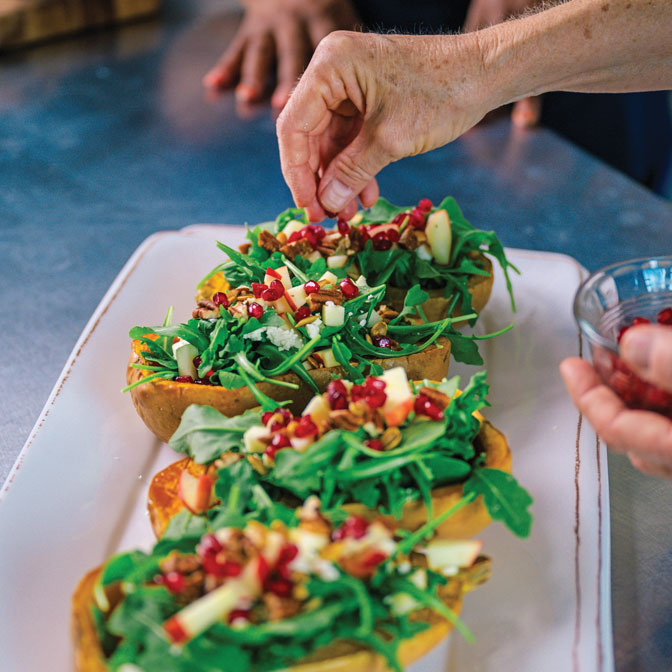
Make the Butternut Harvest Salad at home. Click below to skip straight to the full recipe and enjoy!
Alumni of the program say it can be emotionally challenging, but rewarding, too. Nicki Plummer ’20, ’21 PBC, ’22 MS says, “I worked with a patient who had severe complications of bariatric surgery. I got to guide them through their recovery journey and back to better overall health.” Today, Plummer is nutrition program supervisor with the Guilford County Department of Public Health.
Kim Correa ’21, ’22 PBC says the dietetic internship showed her the direct impact of medical nutrition therapy. “I remember shadowing a session where a patient living with diabetes came in for his follow-up appointment with the dietitian. Teaching the patient how to eat to manage his diabetes improved his quality of life and prevented long-term health complications such as kidney, eye, vascular, nerve, and heart damage.”
It was also essential preparation for her career, she says. “The most impactful parts of my internship were guest speakers in the culinary medicine rotation. Since graduating the internship, I’ve started a thriving private practice.”
In other contexts, registered dietitians educate clients like food service professionals through the medium of food.
For several years, Moyer has offered workshops through a partnership with the NC School Nutrition Association on topics such as “Farm-to-School Meals” and “Allergen Management.”
Last summer, the workshop was “Get Out of Your Comfort Zone in the Kitchen.” It’s educational for the dietetic interns, who help design the recipes, prep the ingredients, and troubleshoot any issues that might distract participants from creating their no-bake energy bites, cottage cheese pancakes, roasted cauliflower, and more.
Dietetic intern Dayana Wagemans ’25 describes the positive feelings in the teaching kitchen. “Everyone is finding their flow and working together. It’s just fascinating to see people really in their element.”
Moyer says there is one showstopper: high-fiber dark chocolate chip ice cream sandwiches. The ice cream, prepared by the dietetic interns, is made with Greek yogurt. The cookies, baked by participants, feature prunes and oats.
“There’s a lot of good research now that shows prunes are good for bone health in women,” Moyer explains. “Our goal is to provide nutrition education that translates to not only the school kitchens but also home kitchens and personal health. Coming from a health sciences perspective, we have the opportunity to effect lifestyle changes and behaviors that lead to a healthier community.”
Nutrition +
Policy
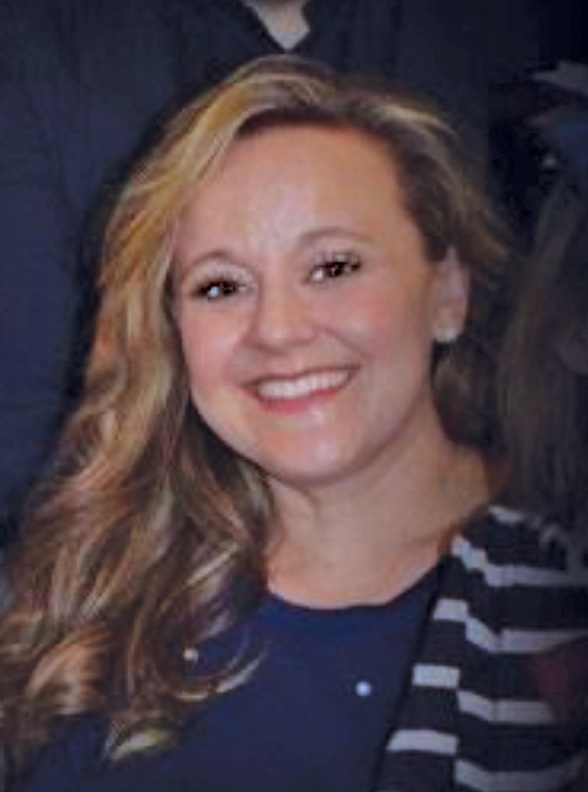
Kellie Casavale ’05 PhD is a national leader in nutrition science and policy who has held positions at the Department of Agriculture, the Food and Drug Administration, and the Department of Health and Human Services. There, she worked to shape the national Dietary Guidelines for Americans.
Following those guidelines “helps to provide the range of nutrients needed for health,” she says.
Did you know that in addition to providing nutrition, the guidelines also help you avoid the “bad” of today’s foods? “Meeting the recommendations can help protect against the health effects from exposure to contaminants. Eating a variety of healthy foods can make it less likely for an individual to be exposed to the same contaminant from the same food many times.”
Casavale now directs the Texas A&M Agriculture, Food, and Nutrition Evidence Center.
Business
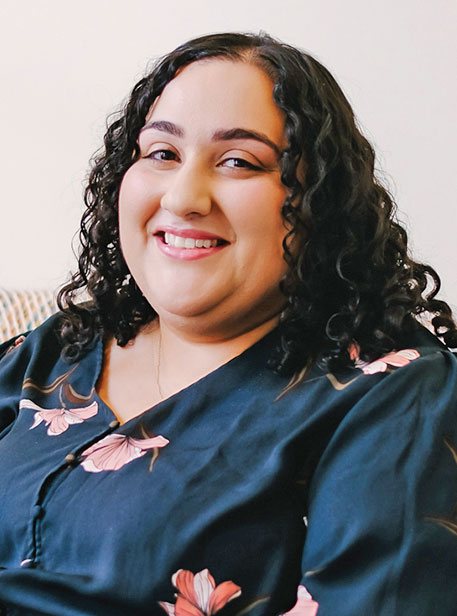
Kimmie Singh ’18 MS, a registered dietitian nutritionist and owner of Body Honor Nutrition in New York City, emphasizes individualized care for her clients. “I want my clients to feel confident in their wisdom around nutrition and their bodies,” Singh says.
She was also an entrepreneur from the start. Singh enrolled in UNCG’s Master of Science in Nutrition Program with the goal of being a business owner. In 2023, she received the Emerging Leader Award from the School of Health and Human Sciences.
In her practice, she uses the science of nutrition to teach clients sustainable health behaviors. Many are recovering from eating disorders and other health issues, so working one-on-one with them is key.
“Everybody is different, but the one thing they all share is that they want to make some changes to their relationship with food,” she says.
Beyond her thriving private practice, Singh is a sought-after speaker at conferences across the United States. She speaks to practitioners, educators, and community members to raise awareness about the harms of weight stigma, advocating for body positivity and weight inclusion.
Service
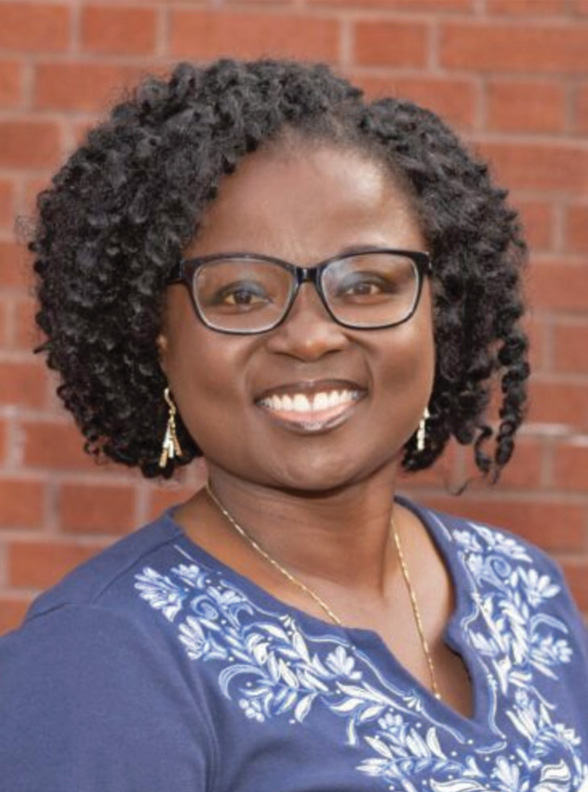
Irene Asare ’11 MS, ’12 PBC says UNCG helped her build a professional network and start her career. “They hold you to a very high standard, but it makes you very competitive.”
After graduating, Asare worked as a dietitian. Strong relationships can be key. “I try to understand where the client is coming from, including their background. That rapport is huge for me. It builds trust, and, in nutrition, you’re telling someone to change their way of life. Without that trust, they won’t be willing to make changes.”
Change can be difficult, but Asare has seen people reap the benefits. One client was bedbound due to his weight. He couldn’t travel and had never seen his granddaughter. “We set a goal,” recalls Asare. “I said, ‘By the time she turns two, 12 months from now, you’re going to be able to see her.’ We were able to get his weight down, and he was just over the moon.”
Asare now works as a systems redesign specialist at the U.S. Department of Veterans Affairs in Kernersville, N.C. “We’re redesigning the current system at the VA. I get the opportunity to work with all the departments, helping them with continuous process improvement.”
Asare also has a background in gerontology. “I just love the older population and many veterans in the population that I serve now are around that age.”
She connects her work with veterans to a personal memory.
“I’m originally from Ghana and my dad worked with the United Nations. Once, we traveled to a country, and there was war, and we had to evacuate. There was a U.S. military person who helped us. I was probably 6 or 8, and he had to carry me to cross a border. I asked my mom, ‘Who is going to help him?’ Since then, I’ve always been looking for that person. I wanted to help that population, so I got a job at the VA and never looked back.”
Fountain View
Sharniquia White makes friends everywhere she goes inside Fountain View Dining Hall. “I had a student that always came up to me like, ‘Hey, best friend!’ She’d always see me on the floor, and we’d always speak.”
White says she helps students navigate the dining hall both figuratively and literally. “If you have a food allergy, if you have an avoidance, or if you have an intolerance, that’s where I step in. I always say I’m the students’ advocate.” She works on student accommodations, staff training related to food allergies, and educational wellness sessions. She’s even starting a newsletter for students.

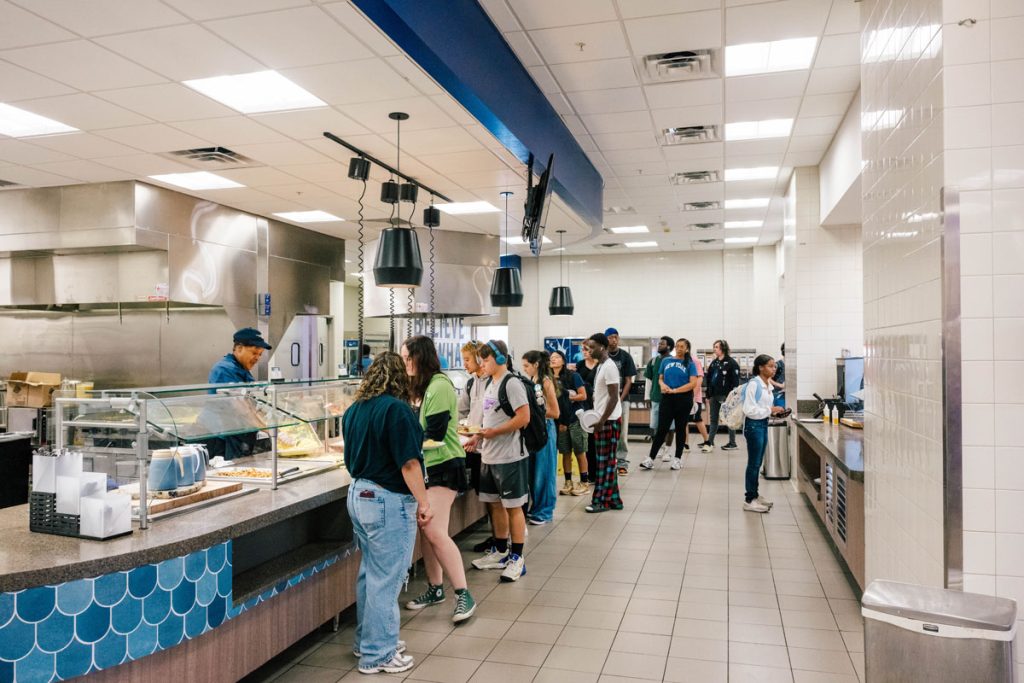
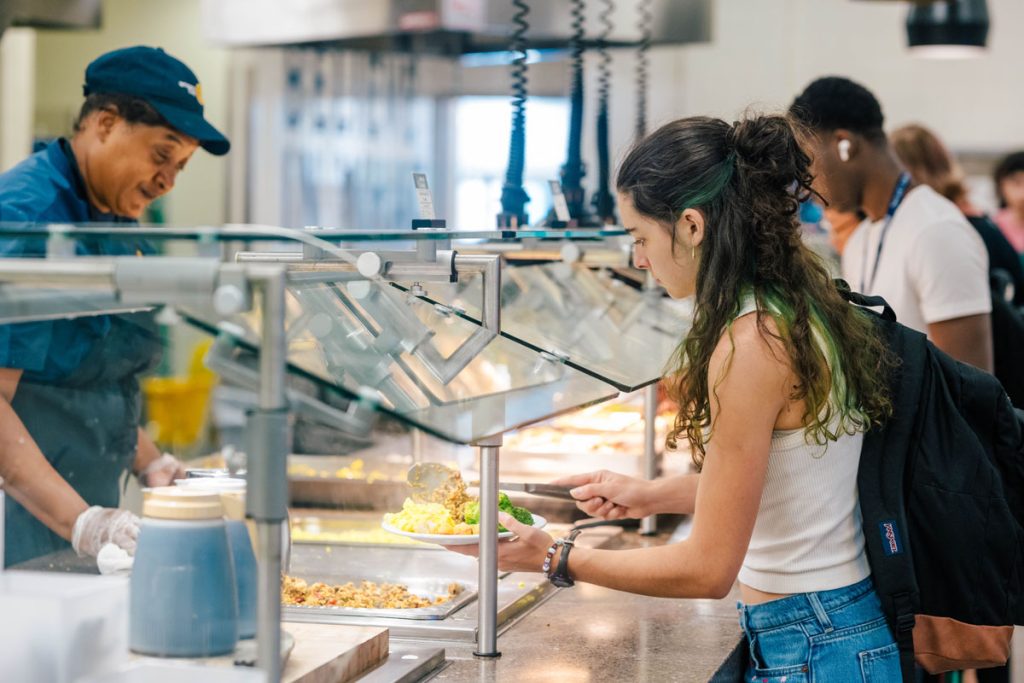
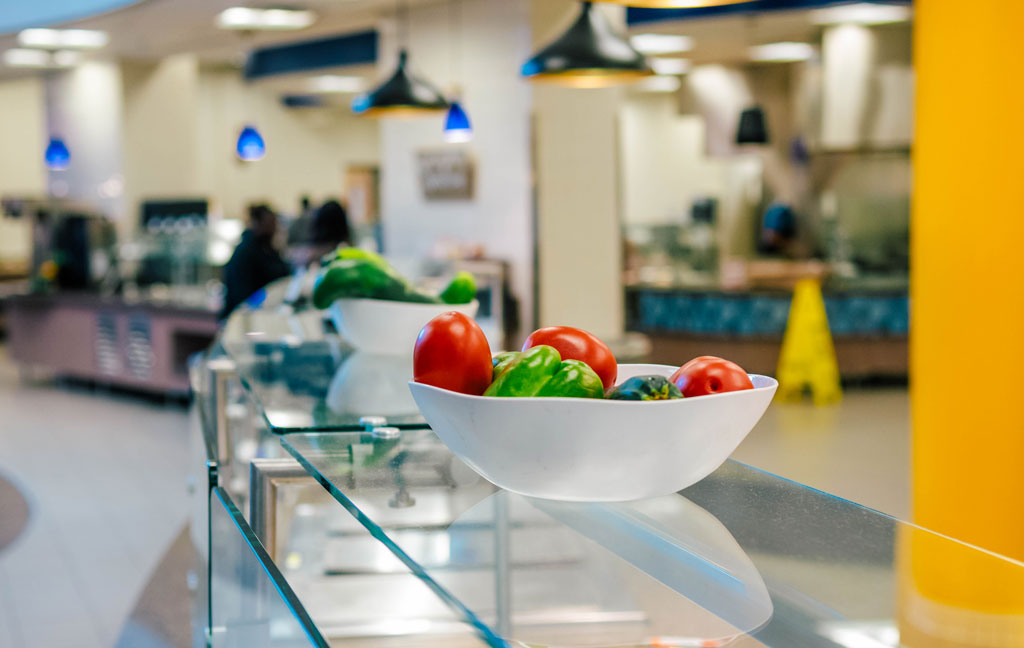
Walking into the hall feels like entering a busy train station. The space has high ceilings, exposed beams, and a grand cupola. Mixing soft wood arches, rich brick, and playful finishes, the dining hall is bathed in natural light from large, curved skylights.
From the stairs to the second-floor dining area, Fountain View opens into a 180-degree view of 13 food stations like The Pit Stop, Homestyle, and The Sweet Shoppe.
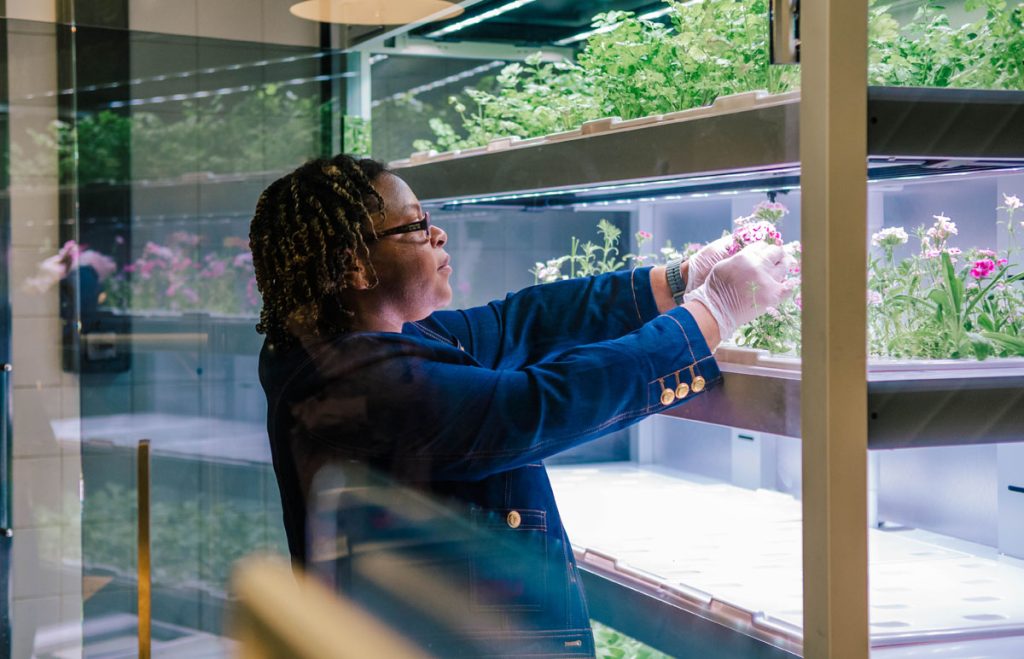
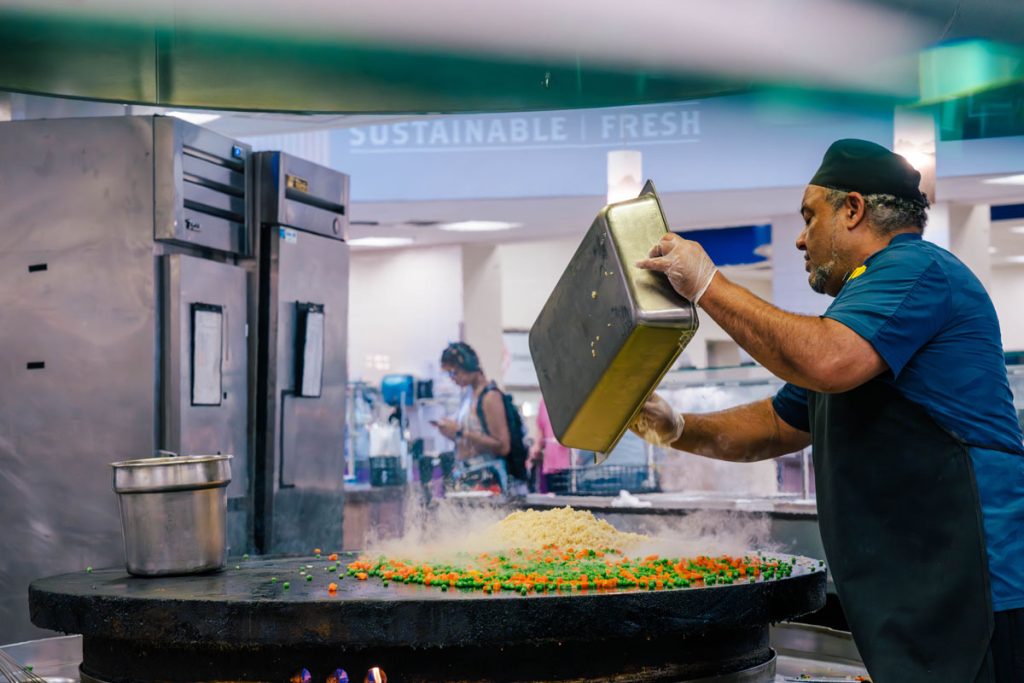
There’s a milk station that includes, along with cow’s milk, chocolate pea milk, oat milk, and soy milk. There’s a hydroponic herb garden growing bok choy that’s used at the Mongolian grill station. It also grows edible flowers and herbs that White uses in mocktails served in the hall.
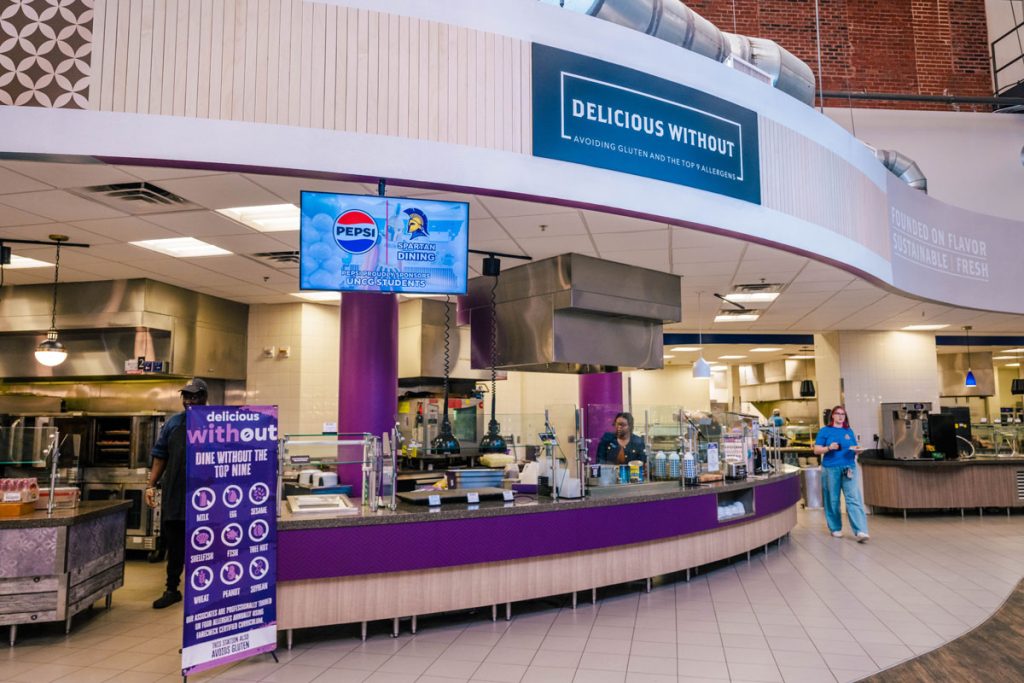
There’s a station called “Delicious Without.” It avoids the nine most common food allergens. Diners can spot it easily – everything on the station, from signage to utensils, is purple.
For some, that sounds like a lot of choice. White says that sometimes visiting parents are surprised. “We get parents in here who say, ‘We had spaghetti every day.’ But, because students are so used to variety, there’s no way you can avoid giving them variety now,” she explains.
Dietitians can have a range of roles in organizations. White began her career as a chef and worked in many different kitchens, including hospitals and care facilities.
“The chefs here always joke and say I ‘speak culinary,’” she explains. “If there’s a new procedure that I’m putting into place, it’s a lot easier for us to navigate through that conversation because I speak their language.”
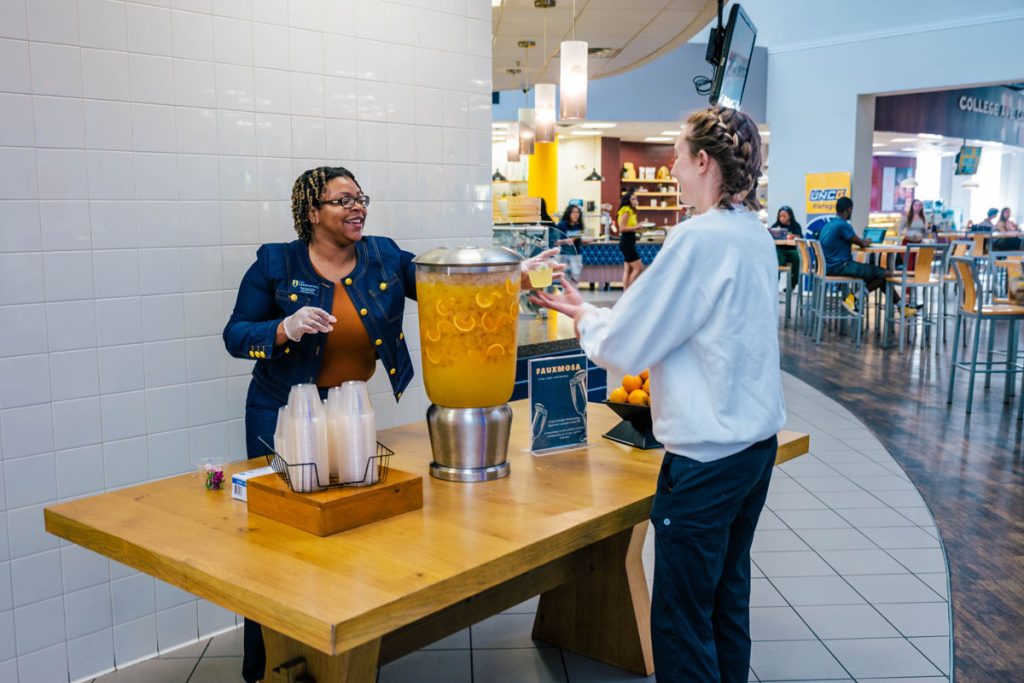
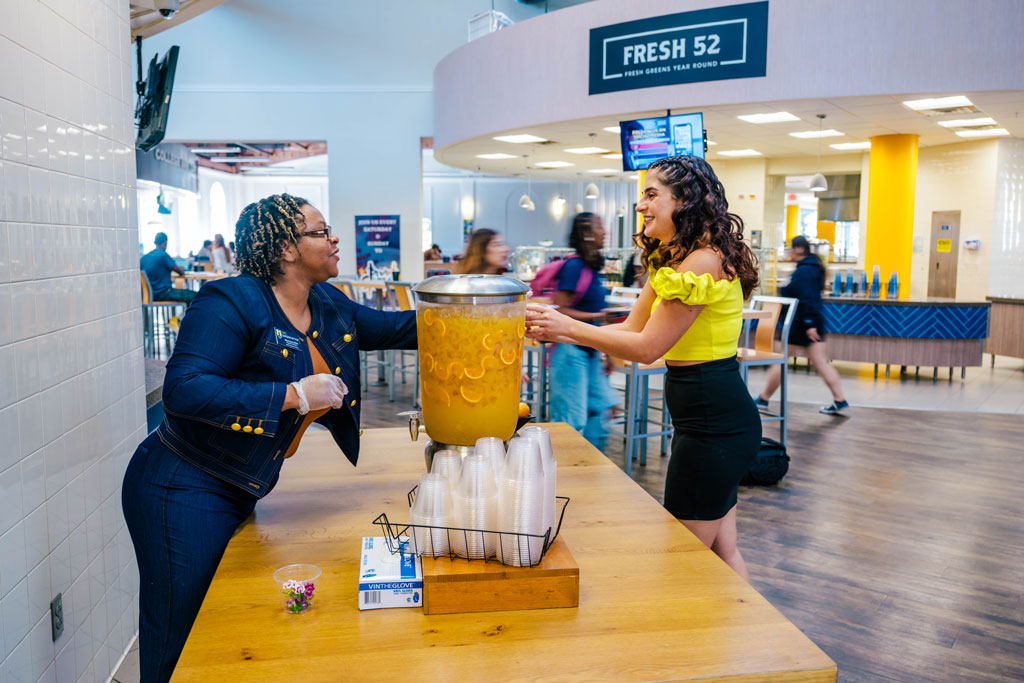
White shares her own recipes with students, too. “When people see me at my table, they know I’m going to have something good for them.” What might diners find there? How about botanical garden lemonade?
“It’s made with lavender syrup, jasmine syrup, and hibiscus syrup,” White explains. “They’re all edible flowers. So, picture yourself walking through a garden and think how relaxing that is.”
White says she likes to be creative, even if it gets a little weird.
“We did a grilled fruit salad with grilled watermelon, pineapple, and peaches,” she explains. “I wanted to show students you can do different things with food that you eat every day without adding sugar.”
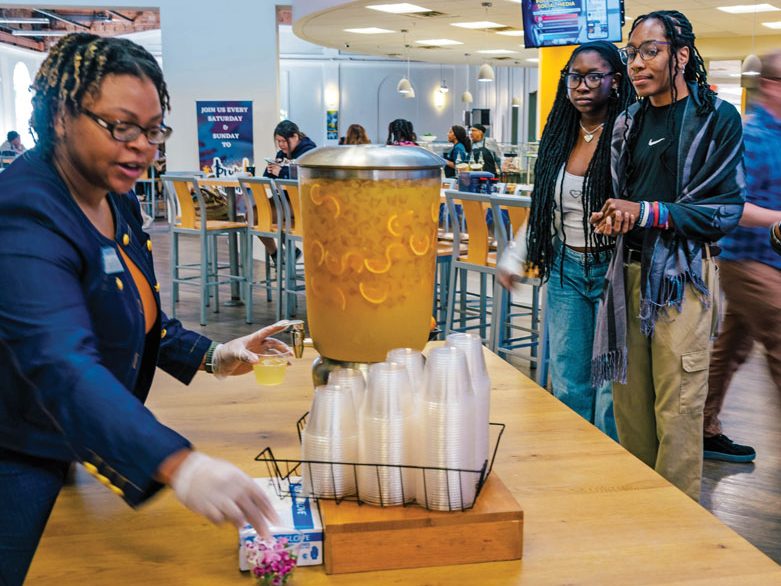
When people see Me at my table, they know I’m going to have something good for them.
—Sharniquia White ’21, ’23 MS, Campus Registered Dietitian
And, in general, Spartan students are willing to try new flavor combinations. “‘Swalty’ is a thing: sweet and salty,” she says. “In the past, who would have thought mac and cheese could be an ice cream flavor?”
Like some of those wild but wonderful flavor combinations, registered dietitians are getting their due, White says. “Registered dietitians are in way more places than people would expect. And then, because the field is so broad, you also have the chance to create your own avenue.”



Finishing Touches
Moyer and White routinely share not only their food, but also their expertise. Both have contributed to articles in outlets like Real Simple, Food Network, Martha Stewart, and Health.com.
And, they both keep learning. The profession demands it. “With nutrition, the science doesn’t stop changing, and the food trends don’t stop evolving. You’re forced to keep learning,” says White.
When the butternut squash comes out of the oven, it becomes the “bowl” that the rest of the ingredients – pomegranate seeds, candied pecans, baby kale, arugula, diced apple, dried pumpkin seeds, feta, and a maple balsamic vinaigrette – are served in. Along with nutritious, accessible ingredients, the dish brings bright flavors.
One is arugula. “It’s peppery,” says Moyer. White adds, “I think of arugula as the ginger of leafy greens because it can taste a little spicy.”
Moyer drizzles the maple-balsamic vinaigrette on top of the squash. Now the dish is perfect – because it’s ready to share.