A global crisis. An empty campus. A new plan. A challenge met.
According to reporting by the UNC System office, UNCG is the No. 1 performer across the UNC System. The University has done a better job of setting and achieving goals related to metrics like four-year graduation rate, debt at graduation for first-time and transfer students, and university cost for each degree awarded than any other system school. The period covered is 2021-24.
UNCG is at the top of the system with a score of 88.5. That’s higher than NC State (84.5), NC A&T (60.4), and UNC-Chapel Hill (51.4). What does this mean in real terms? More completed courses, more savings for students, and a quicker path to realizing dreams.
Chancellor Franklin D. Gilliam, Jr. says, “We are proud of our efforts and appreciate the recognition that our strategic investments bring valuable returns for our students and our state.”
Collaboration was key, and UNCG’s success is thanks to the efforts of faculty and staff across the University community, says Provost Alan Boyette. In other words, it was all-hands-on-deck.
The results?
“The University met the threshold targets set by the system for all component metrics. Our overall highest score was driven by exceeding the stretch goals set by the system for four of the six metrics,” explains Director for Institutional Research and Enterprise Data Management Karen Blackwell.
At UNCG, about half of each newly admitted class self-identifies as first-generation college students. Recent data shows success in increasing retention in this group.
“Over the four academic years 2021-2022 to 2024-2025, first-generation retention improved almost 10 percentage points – from 68.4% for the Fall 2021 cohort to 78.3% for the Fall 2024 cohort,” she says.
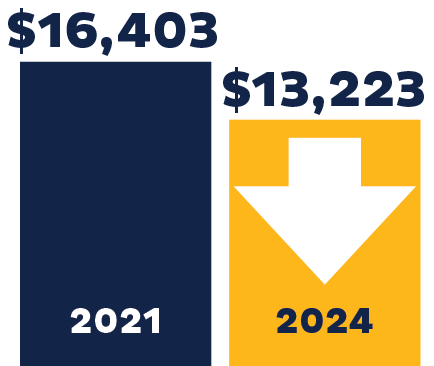
Additionally, first-time student debt at graduation dropped nearly to 2011 levels, and transfer student debt dropped even lower than that.

We are proud of our efforts and appreciate the recognition that our strategic investments bring valuable returns for our students and our state.
—Chancellor Franklin D. Gilliam, Jr.
UNCG made it to the top by putting solutions to work across academic policy, student support, and course design.
“At the heart of our strategy is an integrated approach to student success, one that recognizes that retention isn’t just about academics, but about the full student experience,” says Vice Provost for Student Success Regina McCoy ’98 MPH.
She was part of the team that navigated changes to academic policy, managed the design of gateway courses that affect many majors, and organized professional development opportunities for faculty. All members of that Spartan team agree that UNCG made the right diagnosis – and implemented the right solutions.
NORMAL … INTERRUPTED
In early 2020, Americans’ normal lives were put on hold. It was a time of crisis. The UNC System itself responded with policy changes like going “test optional,” which removed the SAT requirement for new applicants.
Years later, it can be easy to forget how real the danger was – and how great the challenge.
Our approach is giving more students a chance to succeed in their first year and all the way to Commencement.
—Provost Alan Boyette
Grace Wall Pinto ’23 was there. She says, “March 2020 came along, and we were given just a few days to vacate campus. I’m the oldest of eight, so when I moved out of University housing, my family transitioned things around.”
Then, when campus re-opened, Pinto was a resident advisor. “Being responsible for making sure that residents upheld safety regulations was difficult,” she recalls. “You saw anxiety in the students coming in. They wanted to stay safe but also wanted to make friends.”
In 2021, a year after campus first emptied and began operating virtually to ensure the safety of the campus community, Chancellor Gilliam said, “We had to be nimble and adapt quickly to ever-changing circumstances, maintain our high academic standards, and keep our campus operating as safely as possible. And we did it.”
Now, students who attended UNCG during the height of the pandemic have mostly graduated, but even younger students who were in middle grades or high school had their education disrupted. That experience means they may be different from the students on campus 10 or 20 years ago.
“We want to think about how we can serve the students in front of us, not the students that we taught in the past,” says McCoy.
Laura Pipe, director of the University Teaching and Learning Commons (UTLC), agrees. She says by the 2024-25 academic year, she was seeing a “generational difference” in students in the higher education classroom. She also believes UNCG made the right moves for the present moment, and for the future.
“I think these strategies are not going to be just the new normal, I think they’re going to be the expectation. They’re going to be the expectation of young faculty coming in. If they’re not receiving that collaborative space, they’re not going to stay. The same thing is true of our students. If they’re not getting engaging conversations and faculty who show them true, deep, genuine care, they’re not going to stay.”
Making a Difference
first-year
retention

Student Debt
Decreases Since 2021
First-Time Students

Transfer Students
RESILIENCE … AND action
Classroom success comes down to two main factors: great courses and great teachers.
Two initiatives led by UNCG’s Division of Student Success contributed to the No. 1 rating. UNCG “rebooted” key courses and offered professional development for faculty through the Association of College and University Educators (ACUE).
At that time, Regina McCoy was a Provost Fellow. Being a longtime School of Health and Human Sciences faculty member, she also understood that faculty success is key to student success.

What inspires me the most is the energy and excitement students bring as they begin this new chapter.
—Katie Tucker ’17 MED, Associate Director of New Student Transitions
UNCG targeted courses that open doors to degree program success, she says. “We looked at the courses that really get students on their degree pathway; for example, courses that many STEM majors need in mathematics, biology, or chemistry.”
The reboot touched 21 strategically chosen courses. Many of them are considered “high-risk” because students who drop or fail them can find themselves off-track in their programs of study.
Many of the courses also have large first-year enrollments and typically enroll over 13,000 students annually.
A lot depends on those courses, and the faculty who teach them are key to UNCG’s academic excellence. “I’m telling you, they’re the ones doing the yeoman’s work to keep our students here,” says McCoy. “They’ve got the students who are so excited to be here but who also have the butterflies in their belly. Students need that friendly space to learn, and our faculty provide that.”
Between Fall 2021 and Fall 2022, the course reboot led to 166 more successful course completions. That means the student population saved almost $150,000 in tuition expenses because they did not need to repeat these courses.
Supporting students from the beginning is part of the UNCG way. Two programs that start building success and student retention are Spartan Orientation Advising & Registration (SOAR) and Your First Year (YFY). SOAR equips new students to start their UNCG journeys with confidence. YFY provides ongoing support during the year with tailored workshops and communications.
The University also offered professional development courses for faculty with ACUE. They’re the only group that credentials professors nationwide, says McCoy. Around 125 faculty participated in some way.
Participant surveys showed these courses made an impact. For example, faculty reported changes in their beliefs about students. Before an ACUE course, 75% of participants agreed that “All students can be successful in their course.” After the microcredential, that number rose to 94%. Participants had a similarly positive growth in how they perceived faculty influence on students. Before an ACUE course, 86% believed “Instructors can influence how students perceive their intelligence.” After a course, that number increased to 96%.
Associate Professor Erin Reifsteck, who led the development of the online Master’s in Sport and Exercise Psychology program and serves as UNCG’s Faculty Fellow for Student Veteran Well-Being, was a participant. “I chose to complete Creating an Inclusive and Supportive Online Learning Environment because we have several online offerings in the Kinesiology department. It gave me tangible resources that I immediately applied to my courses.”
All told, 557 badges were awarded to faculty participants for specific skills and 87 microcredentials were awarded for completion of ACUE courses.
Faculty development with ACUE was grant-funded, but the University’s UTLC shares the same expertise in innovative faculty training.
Teaching strategies and curriculum development are what UTLC does every day, says Pipe. “Our focus is helping faculty and instructors understand their role in student success. We navigate everything from the forward-facing landscape of teaching all the way down to good general course design.”
We need to ring our own bell. We didn’t just meet expectations. We exceeded them.
—Vice Provost for Student Success Regina McCoy ’98 MPH
This fall, the UTLC launched its Post-Baccalaureate Certificate in College Teaching. “Faculty can get a nationally recognized degree from UNCG. It marries a lot of those pieces from ACUE but does it in the context of our own institution,” she says.
Working with students and nurturing their future is what it’s all about. As UNCG enters the UNC System’s next period of assessment, performance period two, Blackwell is optimistic about the University’s continued success.
“Preliminary data for performance period two indicates a similar performance pattern emerging,” she says. “UNCG’s focus on student success in and outside the classroom will continue to drive improvement relative to the performance metrics.”
KINclusive RESULTS
No one succeeds alone. Community – including peers and professors – has a role to play, too. As Grace Wall Pinto ’23 said, “My first semester, I made friends with the classmates in my physical classrooms, chatting before the professor came in or walking out of class together. First-year students in fall of 2020 didn’t have that.”
That’s why, recently, UNCG has worked to reconnect classroom communities. “I partnered with Student Affairs to give innovation grants to different departments,” says Vice Provost for Student Success Regina McCoy. That let motivated departments try initiatives that worked for them.
One department that has gone above and beyond in this regard is kinesiology in the School of Health and Human Sciences.
Associate Professor Erin Reifsteck, explains, “KINclusive is a dynamic co-curricular program dedicated to building a sense of community.

It emphasizes creating strong bonds among students and encouraging collaboration and peer support through various activities. This inclusive environment ensures that everyone can thrive and grow together.”
KINclusive started with a grant and is now a permanent initiative supported by the department. In 2024-25, it held 40 events and connected with an estimated 150 unique students.
Some events gave students the chance to learn about faculty research, but some were just for fun. Once, Reifsteck even bested an undergraduate in a donut-eating contest! Now that’s a memorable lesson.
CHANGE … LEADS TO SUCCESS
While many small changes led to UNCG’s No. 1 UNC System performance rating, the principles were nothing new to the campus community. Academic excellence, community, and student success are pillars of the Spartan experience.
Vice Chancellor for Student Affairs Cathy Akens says, “Student engagement is a main priority for the University because the research is clear – students who are engaged are more likely to persist toward their goal to graduate.”
Provost Boyette says UNCG will continue to succeed in teaching, learning, research, and community building.
“Faculty know the work they do with our students opens new intellectual and career pathways,” he says. “They’re also securing the support to undertake the research and creative work that creates the future we want at UNCG.”
Boyette also believes the University’s success will be noticed. “Our appraoch is producing academic excellence and giving more students a chance to suceed in their first year and all the way to Commencement,” he says. “There are things we’re doing that other institutuions should take note of.”
In other words, if anyone asks you how UNCG students find success and graduate with less debt, we don’t mind if you tell them!